Astro-tourism continues to be a major travel trend ahead of 2025 with more of us taking an interest in the night sky and special events such as the northern lights, meteor showers, and solar eclipses than ever before.
For example, earlier this year in April the US welcomed approximately 4 million tourists to experience the total solar eclipse that occurred at the time. Gathered Google Searches also show searches for ‘when is the next solar eclipse’ have risen by 229% since April.
To assist budding astronomers, the travel experts at Saga Holidays have created a round-up of the top travel destinations to see and experience a solar eclipse in 2025 and 2026.
This comes as part of a wider study that looked at the best locations across the globe for stargazing, based on the levels of light pollution and average annual cloud cover.
Different types of eclipses explained
Eclipses are a rare lunar phenomenon experienced on Earth, however always come in pairs, with a solar eclipse always occurring approximately two weeks before or after a lunar one.
The key difference between a solar and a lunar eclipse is that, in a solar eclipse, the moon blocks out the sun causing a shadow across the Earth’s surface which essentially turns day to night.
However, during a lunar eclipse, the Earth blocks out the sun causing a shadow across the Moon’s surface making it appear significantly darker or striking red in colour.
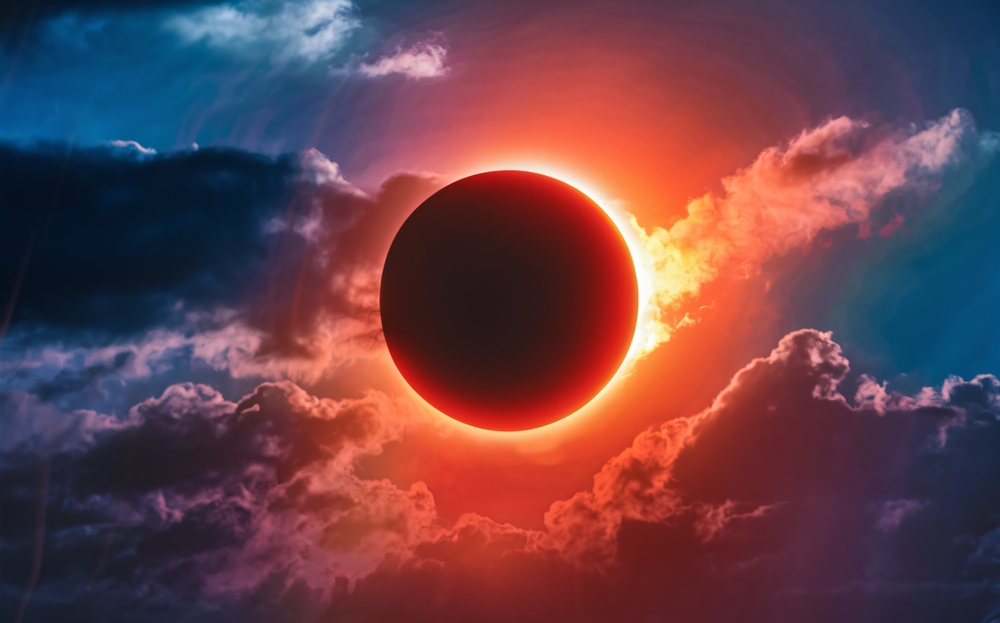
The three types of solar eclipses:
A total solar eclipse occurs when the Moon completely blocks the Sun, casting a shadow across a specific path on Earth, this is known as the path of totality and the most popular area for astro-enthusiasts to travel to. As well as seeming to turn day into night, there are several other effects such as causing great confusion amongst wildlife-birds causing them to go eerily silent, and then, as the sun reappears, create a cacophony of sound.
An annular solar eclipse happens when, once again, the moon moves between the Earth and the Sun, but in this situation, the moon as at its furthest from the Earth, so does not “appear” to be big enough to block out the light of the sun in its entirety. This forms a “ring of fire” where the sun’s outer edges can still be seen.
A partial eclipse happens when the Earth, Moon and Sun aren’t perfectly lined up. This causes only part of the Sun to become blocked, giving it a very distinct crescent shape-perfect for any budding astro-photographers out there.
A guide to upcoming solar eclipses:
For solar eclipses, it’s all about being in the right place at the right time as to experience a total solar eclipse, you need to be located within a long but narrow path, usually less than 150 miles wide, called the path of totality.
On the same day, though, a partial solar eclipse will be visible across a much larger area surrounding the path. To help put you in the right place at the right time, the travel experts at Saga Holidays have put together a location guide for upcoming events:
29th March 2025 – Partial Solar Eclipse
The first solar eclipse in 2025 will be visible across North East America with countries such as Canada, Greenland, the United States, and Iceland providing the best opportunities for viewing.
For Canada, Nova Scotia, New Brunswick, and Newfoundland offer the best locations to view the eclipse since they will experience almost 90% sun coverage. This includes major cities such as Quebec, Saint John, and Halifax.
In Greenland, the western coast regions of Avannaata, Qeqertalik, and Qeqqata all offer the best views with an average of 80% coverage. This includes the towns of Ilulissat, the communities of Disko Bay, Qeqqata, and also Greenland’s capital Nuuk.
| Country | Best Region | Coverage | Local Time |
| Canada | Newfoundland | 92% | 6:30am AST |
| Greenland | Avannaata | 80% | 9am WGT |
| United States | Maine | 69% | 6:30 am EDT |
| Iceland | Entire | 67% | 11am GMT |
In the US, the state of Maine provides the highest levels of sun coverage at 70% followed by New Hampshire and Vermont with 50% average coverage. This includes the major cities of Portland, Burlington, and Montpelier.
Looking at Iceland, the western coast regions of Vesturland, Suðurnes, and Vestfirðir offer the best views with an average sun coverage of 67%. This includes the capital city of Reykjavík as well the second-largest city Kópavogur.
21st September 2025 – Partial Solar Eclipse
This second solar eclipse predominantly takes place across Eastern Antarctica however it will also be visible across the two islands of New Zealand.
New Zealand’s South Island offers a marginally better view than the North Island with an average sun coverage of 69% compared to 62%.
| Country | Region | Coverage | Local Time |
| New Zealand | South Island | 69% | 7am NZST |
| New Zealand | North Island | 62% | 7am NZST |
The best regions include Southland, Otago, Canterbury on the South Island and Wellington, Manawatu, and Hawkes Bay on the North. The best cities for viewing the eclipse include Christchurch, Wellington and Auckland.
12th August 2026 – Total Solar Eclipse
Whilst 2026 also has two solar eclipses, only one of these will be easily visible. It is set to take place across the Atlantic and Western Europe with several countries in-line to experience a total eclipse with a sun coverage level of 100%.
This means that for some regions in Greenland, Iceland, Spain, and Portugal the moon will completely block out the sun casting complete darkness.
| Country | Region | Coverage | Local Time |
| Greenland | Sermersooq | 100% | 5pm GMT |
| Iceland | Vesturland | 100% | 5:30pm GMT |
| Spain | Castile & Leon | 100% | 8:30pm CEST |
| Portugal | Trás-os-Montes | 100% | 7:30pm WEST |
Neighbouring countries including France, Italy, and Switzerland will get to experience up to 95% coverage with the sun almost being entirely blocked out. The United Kingdom and Ireland will also get to experience the eclipse with up to 95% sun coverage.
The major cities of Reykjavík, Madrid and Barcelona will get to experience the total solar eclipse as well as the popular holiday destinations of the Balearic Islands, Costa Dorada and Costa Blanca.
Astrophysics expert shares some viewing advice
Dr Sheona Urquhart, a lecturer in astrophysics has shared some top tips and viewing advice to experience a solar eclipse.
“Plan out your viewing location carefully and allow plenty of time to get there. In urban areas, there will be an influx of visitors, and you don’t want to miss out because you’re stuck in traffic. Also, try to find a clear open space away from any streetlights – you don’t want these to automatically turn on and ruin the dark ambience.”
“When viewing a solar eclipse eyewear protection must be worn to prevent causing damage to your eyes. Specially designed solar glasses should be worn, not regular sunglasses as these are not strong enough to stop the bright solar rays.
“If you are planning to use a telescope or binoculars to view the eclipse, these must be fitted with a specialised solar filter to prevent causing damage to your eyes. Make sure to only use the filter supplied by the instrument manufacturer, and only ones that are fitted to the front of the telescope, not the eyepiece.
“When I was a young child, I was lucky enough to see a total eclipse of the sun when we were in Cornwall. This was back in 1999 and is something that I will never forget. The most surprising part for me was the effect it had on nature-suddenly everything fell silent as totality occurred.
“If you have the chance to view a solar eclipse-do it!”
For more information on international stargazing tours and holidays, visit the Saga website: https://holiday.saga.co.uk/blog/best-places-for-stargazing-around-the-globe
Fashion expert reveals what to pack for a countryside staycation
Valentine’s Day Recipes We Love