
Despite 81% of workers claiming to have a good work-life balance.1, new data suggests the reality is far less positive. Overtime culture is placing huge pressure on UK employees, leaving many at risk of stress, burnout, and ultimately job dissatisfaction.
Adobe Express has conducted an extensive study2, to find out exactly which industries and cities are doing the most overtime, how much extra time is being spent, and why employees feel forced to work beyond contracted hours.
More than 1 in 10 (11%) Brits are working overtime five days a week, with 3% working overtime every day. Meanwhile, 21% work overtime twice a week, often clocking between one and six additional hours.
For many, overtime isn’t a choice but a necessity:
- 41% blame high workloads that can’t be managed in contracted hours.
- 37% say deadline pressures drive them to stay late.
- Half of sales professionals feel direct pressure from employers to work extra hours.
These factors align with common burnout risks blurred work-life boundaries, unmanageable workloads, and relentless stress.
The cost of long hours
Although a third of workers say they do overtime for additional income, the study shows the toll of excessive hours:
- 19% of employees are seeking new jobs due to overtime demands.
- In Sheffield, where 13% work overtime seven days a week, 56% of workers are actively looking to move roles.
Which industries are doing the most overtime?
Some industries are particularly vulnerable to burnout:
- Law professionals top the list, with 20% working overtime seven days a week.
- Property and Construction (10%) and Engineering and Manufacturing (8%) also report daily overtime.
- Marketing, Advertising and PR workers are most likely to cite excessive workload (75%) as the cause.
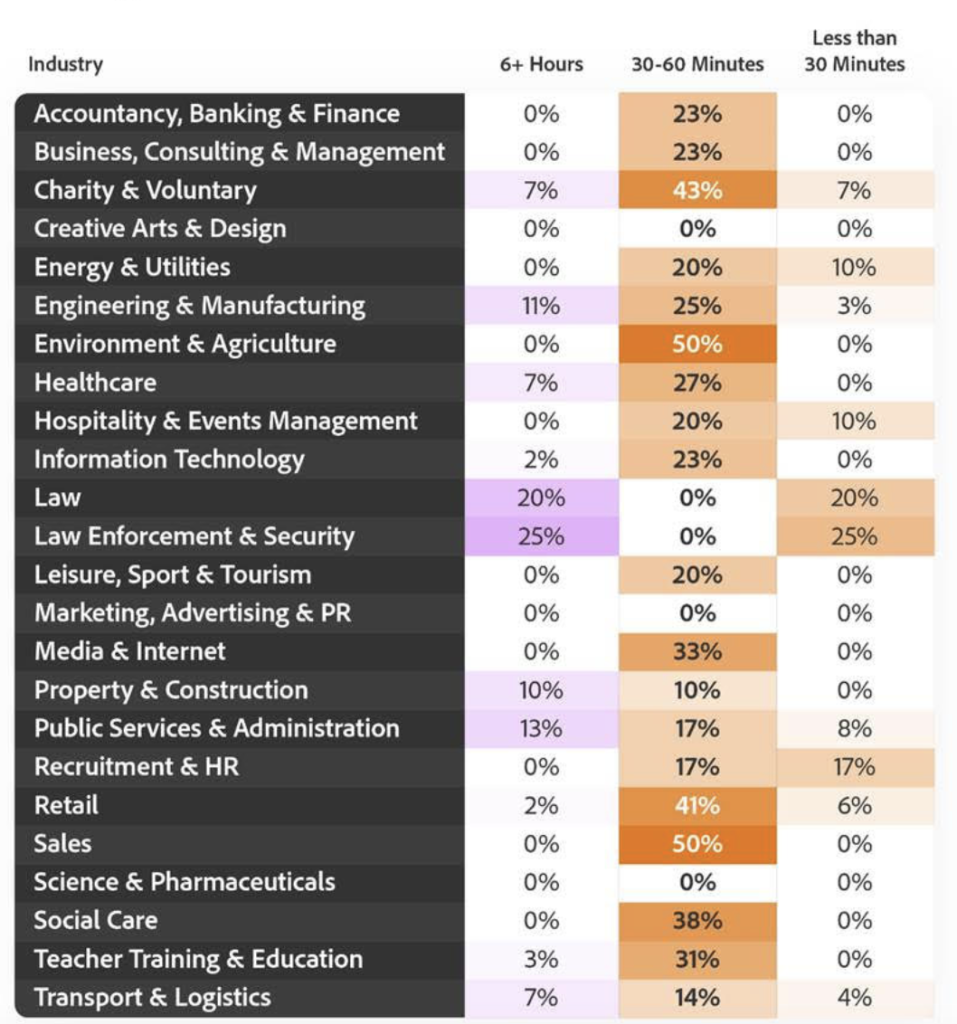
- Enforcement and Security professionals work the longest individual sessions, with 25% clocking six or more hours per overtime stint.
How often do industries work overtime
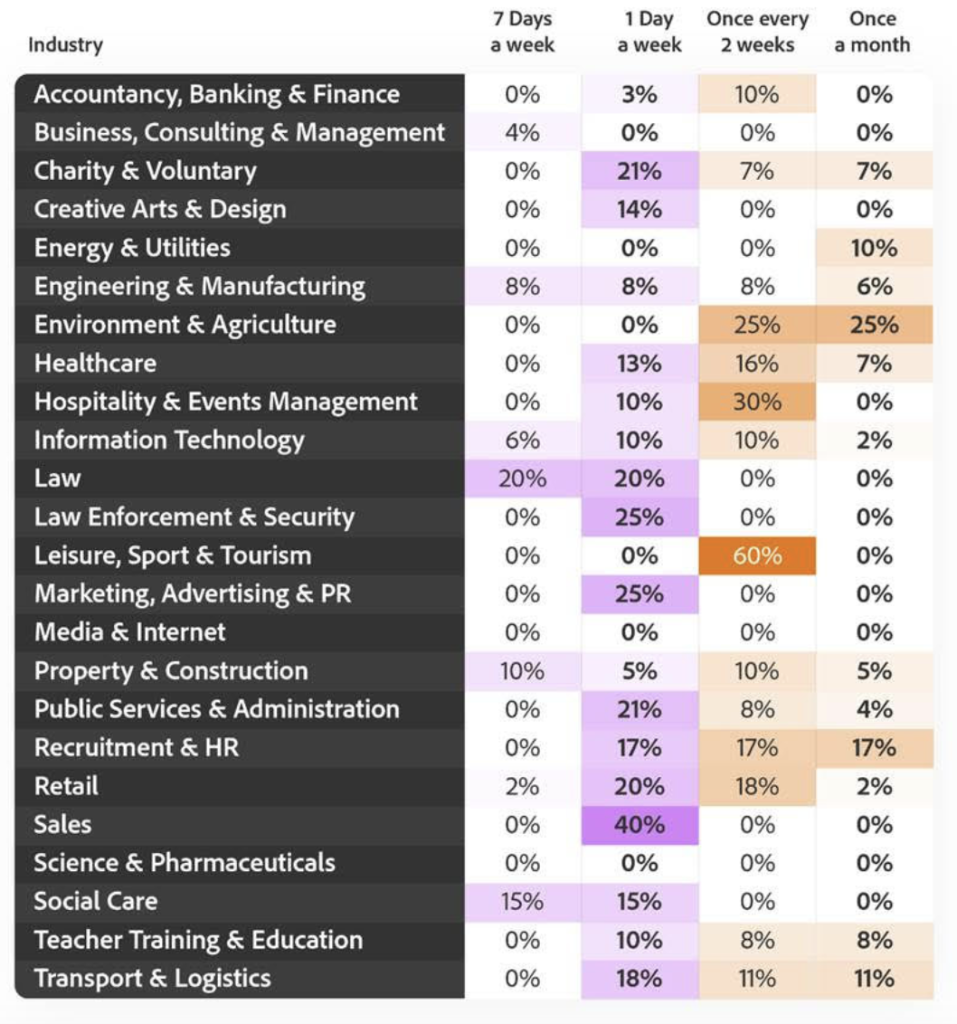
In the Sales sector, most people (40%) are working 1 day per week overtime, with 25% of Law Enforcement and Security, as well as Marketing, Advertising and PR also doing one day per week.
Regarding how many hours are being worked per overtime session, Enforcement and Security workers top the ranking (with 25% clocking six plus hours), followed by Law (20%), and Public Services and Administration (13%). Meanwhile, in the Information Technology industry, just 2% are working more than six hours. Environment and Manufacturing, and Sales workers tend to keep overtime minimal too, with 50% logging 30-60 minutes. The full list can be found below:
The amount of hours each industry works during an overtime session
75% of Marketing, Advertising and PR workers currently do overtime because of a high workload that they can’t complete in their contracted hours, the highest out of all industries, whilst 75% of people working in Environment and Agriculture do it for the extra pay. 50% of people working in sales feel pressure from their employer to stay and work overtime.
Which cities are most susceptible to burn out?
The research also reveals where in the UK burnout pressures are highest:
- Sheffield has the highest proportion working overtime seven days a week (13%).
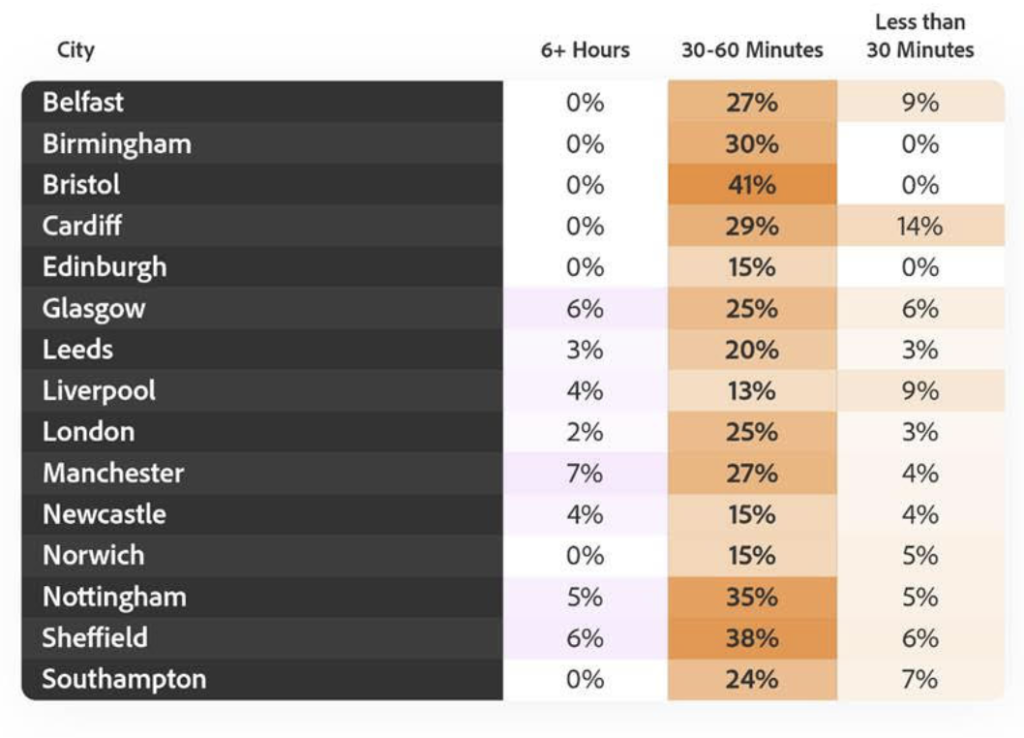
- Cardiff leads for longest overtime sessions, with 14% working six or more extra hours each time.
- Southampton workers are the most likely to cite unsustainable workloads (59%) as their reason for staying late.
How often do cities work overtime
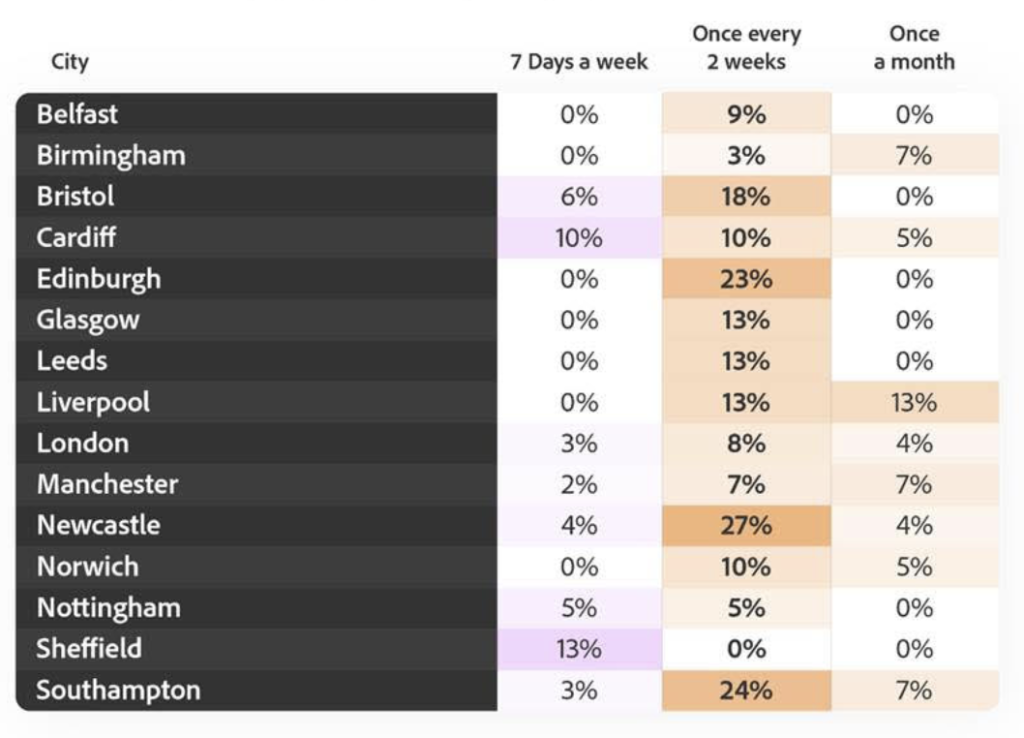
Cardiff is officially the city working the most hours of overtime, with 14% working more than six hours each time, followed by Liverpool (9%), and Southampton (7%). In Bristol, 41% are spending between 30-60 minutes working after hours each week, with Sheffield following closely behind at 38%. 14% of people in Cardiff are spending less than 30 minutes on overtime each session, the lowest amount of time out of all cities. The full listings can be found below:
The amount of hours each city works during an overtime session
59% of people in Southampton are working overtime due to high workloads, the highest percentage out of all cities and 48% of people in Nottingham do it to overcome deadline pressures. Almost a quarter (24%) of Bristolians stay later in work because they enjoy it and want to do more. 56% of Sheffield workers are currently looking for new work to change their position.
The wellbeing impact
While flexible and hybrid working have improved work-life balance for some, overtime culture continues to threaten employee wellbeing. Burnout risks are clear: stress, longer hours, and rising dissatisfaction are driving many workers to look elsewhere creating costs not just for individuals, but also for employers struggling to retain talent.
For further insights into overtime across different industries and UK cities, as well as tips on how to work smarter, not harder, visit the Adobe Express blog here: https://www.adobe.com/uk/express/learn/blog/after-hours-industries
Rest and Recharge: Sleepcations Are the Travel Trend of the Moment